Thomas Galvin

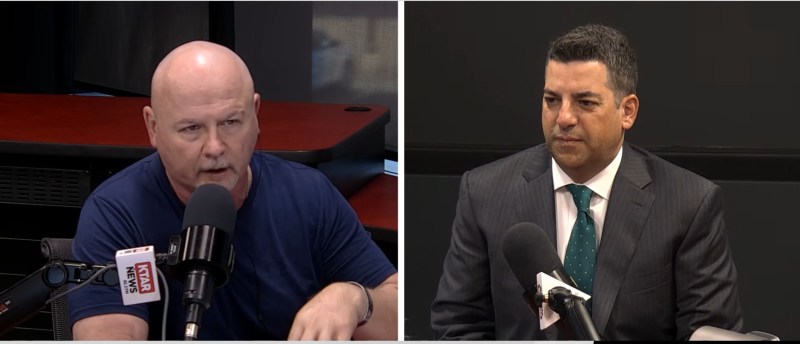
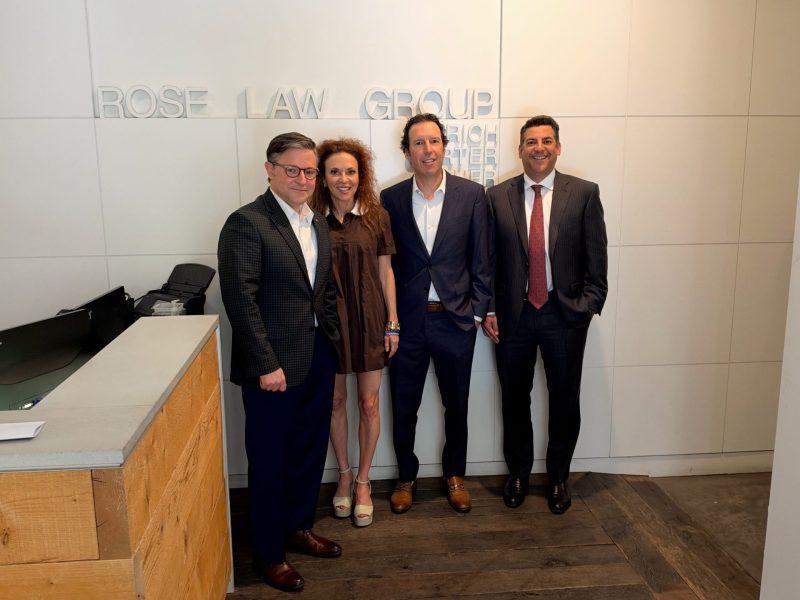
Thomas Galvin is a partner at Rose Law Group and his legal career has been spent fighting for and on behalf of homeowners, property owners, farmers, and small business owners. His legal practice focuses on land use, real estate, and water law. Thomas has represented families, homeowners, and small businesses who have been affected by government regulations, burdensome bureaucracy, and onerous property taxes.

At Rose Law Group, Thomas has advised a professional sports team on the successful public approval of an extended lease for a multi-purpose sports arena; represented developers and business owners in successful applications to zoning boards and city councils throughout the Valley; secured variances and use permits for residential and commercial projects throughout Arizona; represented clients before the Arizona State House, State Senate, and various administrative agencies and boards; drafted legislation which was signed into law; coordinated and mobilized a successful grassroots effort of thousands of residents of a city to prevent the approval and development of a proposed use that was incompatible for the area; has been interviewed on various local televisions news programs and has had op-eds published in local newspapers.

Previously, Thomas was the Policy Advisor to Republican Brenda Burns at the Arizona Corporation Commission. The Commission regulates public utilities, securities registration and licensing, incorporation of businesses, railroad/pipeline safety and oversees the Arizona Power Plant and Transmission Line Siting Committee. Serving in a chief-of-staff role, for one of five statewide elected officials at the Commission, Thomas worked on a variety of matters, most notably energy (renewable energy, natural gas, nuclear, coal, sustainability, water issues, and energy efficiency).

Prior to state service, Thomas was at CB Richard Ellis, the world’s largest commercial real estate services company. At CBRE, Thomas was a member of the Labor Analytics Group (LAG) which is a consulting team with a national scope and has many clients in the Fortune 100. At LAG, Thomas helped clients with labor market intelligence and economic development incentives in addition to their commercial real estate needs.

Before that, Thomas was involved in real estate development. He has worked on the construction management of a Class-A commercial facility and was involved in evaluating potential acquisitions, including underwriting cash flows and assessing risks and opportunities.

In his free time, he likes to spend time with his family, and loves exploring the beautiful state of Arizona.

Thomas received his A.B. in History from the College of the Holy Cross (Worcester, MA) and his J.D. from the University of Notre Dame.

In The News

Thomas Galvin, Maricopa County supervisor and Rose Law Group partner, joins forces with economic development delegation in London

Maricopa County D2 Supervisor Thomas Galvin joined Phoenix Mayor Kate Gallego, Arizona State Universe President Michael Crow, and many civic and business leaders on an economic development delegation to London this week, where they celebrated the opening of ASU London. Also on the itinerary: Galvin and group also met with healthcare technology, defense, and aerospace companies based in both Arizona and the UK. The

Read More »

Rose Law Group raises the bar with Valley’s ‘Top Lawyers’ in PHOENIX magazine feature

Rose Law Group is proud to announce that eight of its attorneys have been selected as 2026 Top Lawyers by PHOENIX magazine. The annual list is determined by peer voting among members of Arizona’s legal community. The Rose Law Group attorneys recognized across 12 practice-area categories are: Jordan R. Rose — Land Use and Environmental Law; Sports Law Court S. Rich — Energy and Mining;

Read More »

Maricopa County Supervisor and Rose Law Group Partner Thomas Galvin tells CNBC about county prediction market policy

By CNBC Delaware County, Pennsylvania, and Maricopa County, Arizona, have adopted policies addressing employee prediction market activity. Officials say the rules are meant to prevent financial conflicts, protect workers from allegations and reassure voters, not respond to evidence that election workers have used the markets. CNBC’s Ananya Chetia reports on how prediction markets are prompting new safeguards and raising questions

Read More »

Have a Legal Question?

Call us today at 480.505.3936 or contact us via email by clicking here.